Arturas Bukauskas holds a PhD in Arts and is an Associate Professor at the Department of Photography, Animation, and Media Arts at the Vilnius Academy of Arts. His background is in documentary film directing. His artistic interests include the intersections of living and non-living entities within societal constructs, along with their corresponding concepts and transformations. He works with experimental forms of the moving image and explores the interactions between text and image. He investigates the aesthetic and conceptual expressiveness of technology-based art, with a particular research focus on the phenomenon of animation.
Arturas Bukauskas creates exhibitions whose content is connected through the principles of moving image montage. It is like the Ship of Theseus paradox, asking what remains in reality when its component parts are renewed.
[→] “PERSONAE”. Video installation for N. Valuntonytė’s performance-recital “Alter.” Vilnius, April 9, 2026.
[→] "ALL WILL BE". Solo exhibition “ALL WILL BE.” Jewish Culture and Information Center, Vilnius, January 27 - February 10, 2025
[→] "THINGS YET TO HAPPEN". Solo film installation “THINGS YET TO HAPPEN.” Artist presented by Titanikas Gallery. Art Fair Vilnius’24. October 4 - 6, 2024
[→] "Unbind him and let him go". TITANIKAS Gallery. Vilnius, Lithuania, February 15–March 9, 2024
[→] Spare parts for Theseus plane. Jonas Mekas Visual Arts Center. Vilnius, Lithuania, January 23 - July 15, 2023
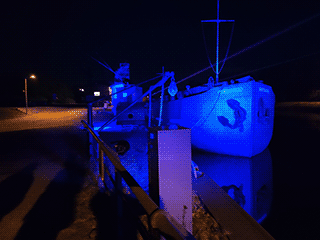
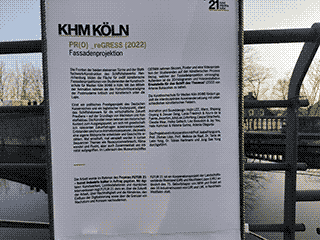
[→] Collective exhibition "PR(O) _reGRESS". FUTUR21. Object "Ersatzteile für das Schiff des Theseus?". installation in the former ship elevator industrial museum, on the ship - in the OSTARA gallery. Henrichenburg, Germany, March 26 - April 2, 2022
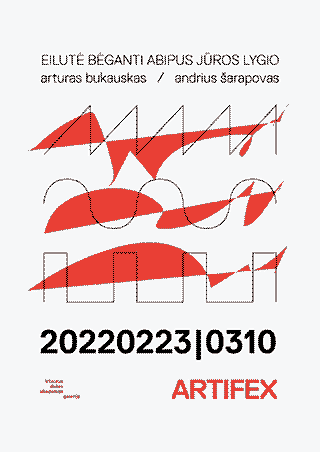
[→] Duo exhibition "Arturas Bukauskas/Andrius Šarapovas - a line running on both sides of sea level", ARTIFEX gallery, Vilnius, Lithuania, February 23 - March 10, 2022
[→] Audiovisual project "Women's portraits". Vilnius, Apr. 29, 2014. Klaipėda, May 21, 2014
[→] L. Narvilaitė "Gardens of Sorrow" – ensemble "Giunter Percussion." Video projection. "Young Music" festival, Klaipėda, May 7, 2010
[→] Duo Strimaitis music and video performance "Night music". Video installations. Festival "Music of Change". Klaipeda. November 10. Vilnius, April 11, 2009.
[→] "MANAS NAMAS." Group moving-image installation, Lithuanian Medical Library, Vilnius, October 15–31, 2024. Curator.
[→] "ArtVilnius ’19." Titanikas Gallery presentation (co-curator), May 29–June 2, 2019. TOP 7 Best Galleries Award and Audience Choice Award.
[→] "Eikasia." Exhibition of Virtual Reality and Media Art (co-curator), St. Gallery of the Church of Our Lady of Peace, Vilnius, May 13–26, 2019.
[→] "Anima(re)anima in the Expanded Field." Exhibition (co-curator), Titanikas Gallery, Vilnius, May 4–16, 2018.
PRACTICAL TRAINING ON A HUMAN SUBJECT
live-action and 3D animation, 11 min, 2007
ESTETOMOTTO
live-action and 3D animation, 16 min, 2005
EROTOMOTTO
live-action and 3D animation, 9 min, 2005
A DAY OF BIRDS
animation, 2 min, 2D multimedia, international project "Optimus Mundis", 1998
PLAY
experimental film, 40 min, 35 mm, 1995
A LULLABY FOR THE CITY
animation, 3 min, 2D multimedia, 1995
A TELEPHONE LINE
animation, 5 min, 35 mm, 1991
[→] Artistic research presentation for the 5th International Conference on Time Perspectives (2021)
[→] "Myth no. 688E" 2 audiovisual texts for G. Sviderskytė's research "Lituanica documentica". Vilnius, January 2013
◆ Zalieckas, I. (2025, March 1). Animacijos virsmai: Pokalbis su Arturu Bukausku. Žurnalas “Kinas”. Retrieved from https://www.zurnalaskinas.lt/tema/2025-03-01/Animacijos-virsmai
◆ Bukauskas, A. (2023). Mirksi žymeklis. Pavadinimo vietoje – ne iki galo surinktas tekstas. „Jie atgijo”... Apie rekursinę animaciją. Dailė, (90). ISSN 0130-6626.
◆ Bukauskas, A. (2022). Menama nukritusio lėktuvo ir lakūno kūnų sueitis (materijos reginiai). Acta Academiae Artium Vilnensis, (106), 302–321. https://doi.org/10.37522/aaav.106.2022.128
◆ Bukauskas, A. (2021). Virtualios realybės kaukė. Technologijos ir menas. Tyrimai ir aktualijos, (12), 94–98.
◆ Bukauskas, A. (2011). Ritualinis laiko aukojimas. In Kultūra ir menas (temų konspektai). Vilnius: Lodvila.
Artist and moving-image researcher
Vilnius, Lithuania
Vilnius Academy of Arts
PhD in arts
VGIK, Russian Academy of Cinema (Всероссийский Государственный Институт Кинематографии)
M.A., Department of film directing, documentary film directing
V. Kobrin’s class
Vilnius University
M.A., Faculty of Physics, Radiophysics
"ALTERNATIVE SCREEN" film studio
Screenwriter, film director
Animation department, Lithuanian Film Studio
Film director, screenwriter, animator
Vilnius Academy of Arts
Department of Photography and Media Arts
Associate Professor
Lithuanian Academy of Music and Theatre
Faculty of theatre and film
Lecturer⠀⠀⠀⠀⠀⠀⠀⠀⠀
#
# *** WARNING - DO NOT EDIT OR IN ANY WAY CHANGE THIS FILE!!! ***
#
# Revision History:
#
# 4-14-1996 v1.0 - Verified by UCALC 2.01 - based on
# MIDPAT 2.0 patch list
#
#Explanation of Columns: Patch # 256K 512K 768K 1024K Patch Name
#
0, 2, 2, 0, 0, acpiano
1, 128, 128, 128, 128, britepno
2, 128, 128, 128, 128, synpiano
3, 128, 128, 128, 128, honky
4, 2, 2, 0, 4, epiano1
5, 128, 128, 128, 128, epiano2
6, 128, 128, 128, 128, hrpschrd
7, 7, 7, 7, 7, clavinet
8, 12, 12, 12, 8, celeste
9, 128, 128, 128, 128, glocken
10, 12, 12, 12, 8, musicbox
11, 128, 128, 128, 128, vibes
12, 12, 12, 12, 12, marimba
13, 12, 12, 12, 12, xylophon
14, 12, 14, 14, 14, tubebell
15, 128, 128, 128, 128, santur
GRAPHICS: [ ] SVGA [ ] VGA [ ] EGA [ ] Other:__________________________
COMPUTER: [ ] P6/686 [ ] PENTIUM/586 [ ] 486 [ ] Other:________________
SOUND CARD: [ ] Sound Blaster & Pro [ ] SB 16 [ ] SB AWE 32 [ ] Ad Lib
[ ] PAS 16 [ ] GUS [ ] None [ ] Other:_____________________
--- continued ---
A     L     L       W   W  I  L     L       B   E
  █   █     █       █   █  █  █     █       ████
 █ █  █     █       █   █  █  █     █       █   █
█████ █     █       █ █ █  █  █     █       ████
█   █ █     █       █ █ █  █  █     █       █   █
█   █ █████ █████     █     █████ █████     ████
"ALL WILL BE"
January 27 - February 10, 2025
Jewish Culture and Information Center, Vilnius
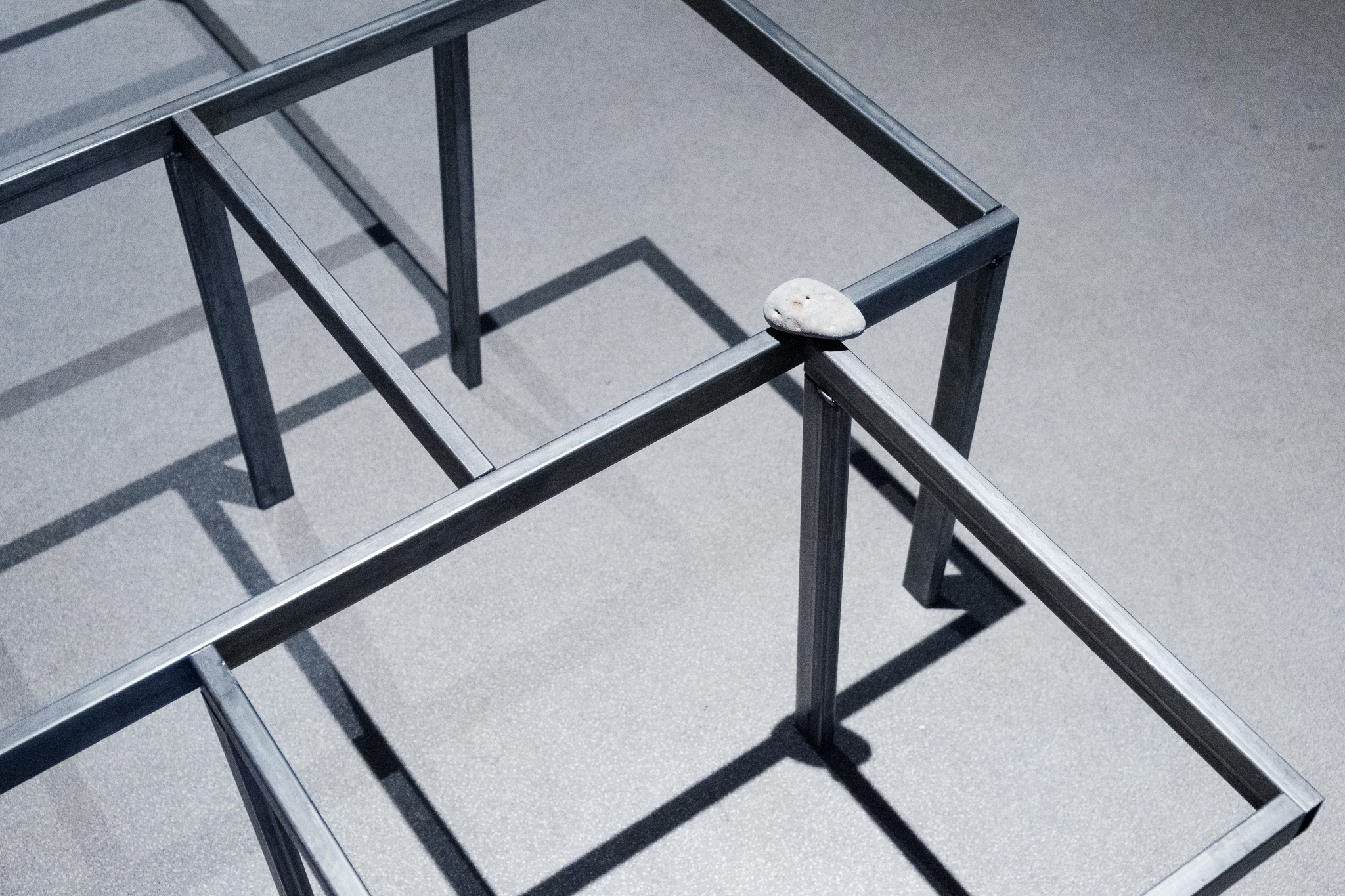
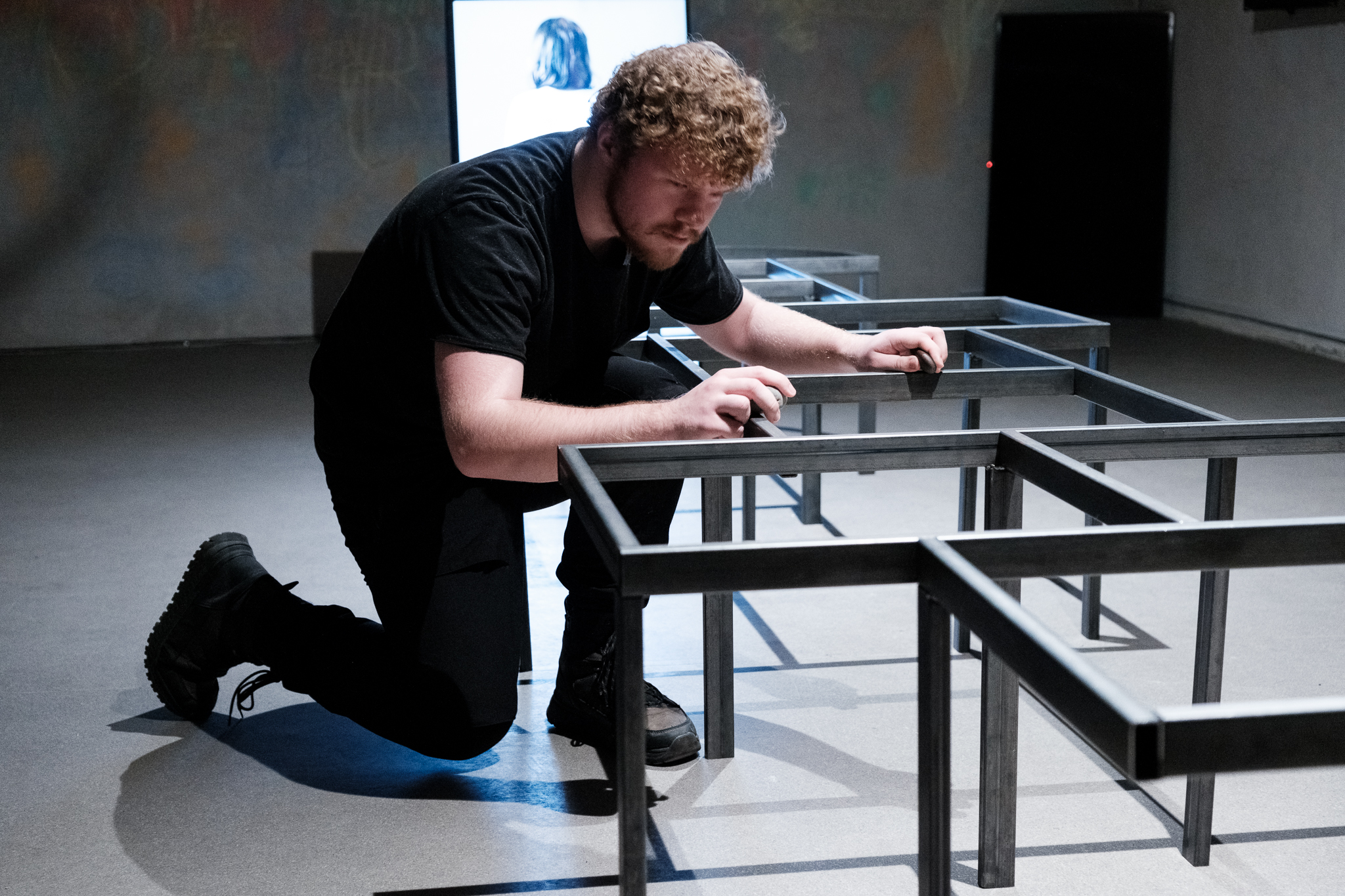
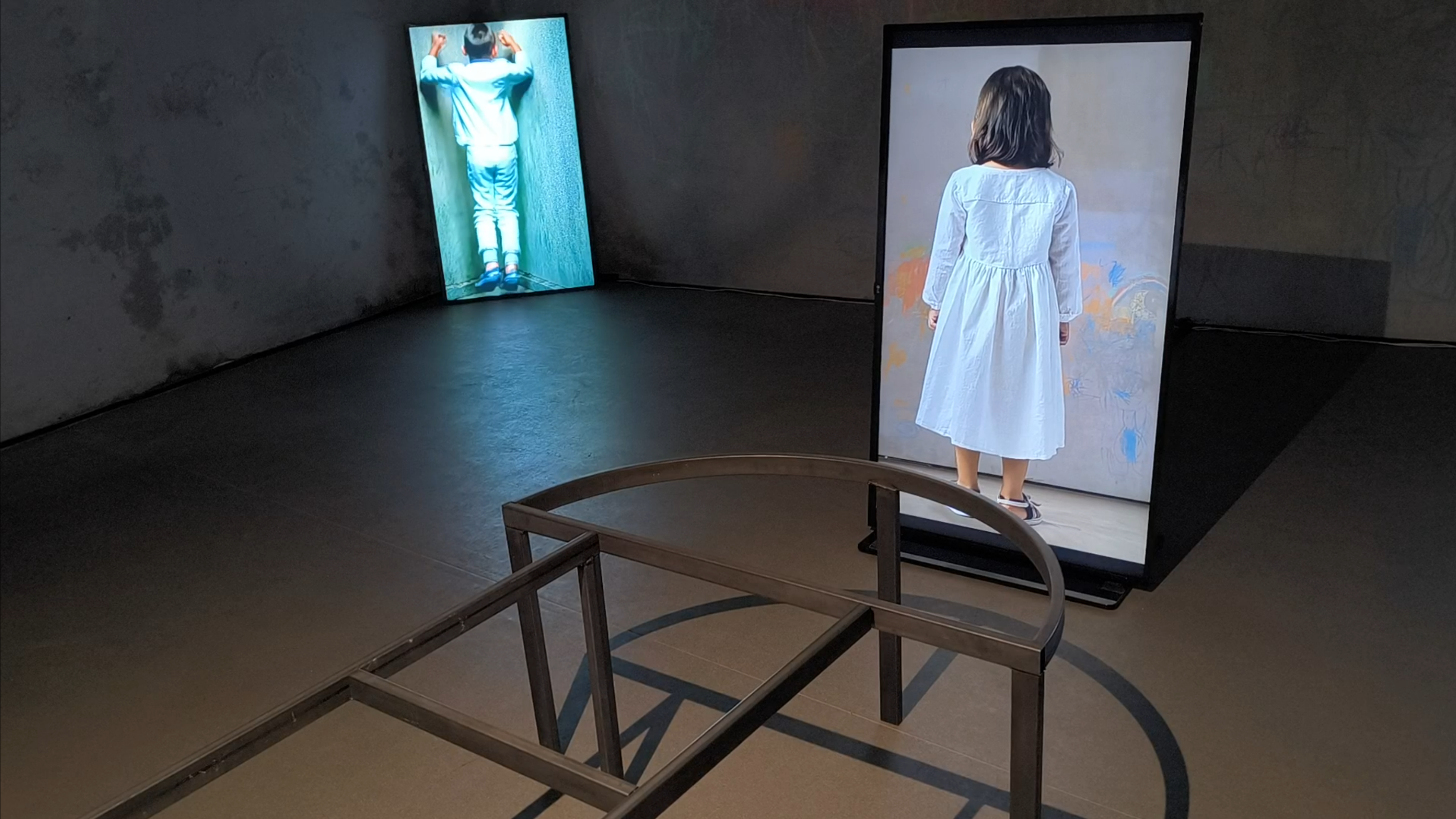
What words were exchanged between the father and his son as they walked toward the place of their execution?
Reality is composed of visions of a future once promised to someone. Parents had to reassure their children that the journey would be long, that everything would be fine. It would not be a punishment, but a game – like playing hopscotch or climbing ladders. The spoken words did not survive, as the journey was the last one.
In commemoration of International Holocaust Remembrance Day. This exhibition is an escorting of words into images.
Installation/Video: Arturas Bukauskas
Video/Sound/Performance “Counting Rhyme”: Arturas Sidas Bukauskas
#    _____ _  _ ___ _  _  ___ ___  __   _____ _____   _____ ___    _  _   _   ___ ___ ___ _  _
#   |_   _| || |_ _| \| |/ __/ __| \ \ / | __|_   _| |_   _/ _ \  | || | /_\ | _ | _ | __| \| |
#     | | | __ || || .` | (_ \__ \  \ V /| _|  | |     | || (_) | | __ |/ _ \|  _|  _| _|| .` |
#     |_| |_||_|___|_|\_|\___|___/   |_| |___| |_|     |_| \___/  |_||_/_/ \_|_| |_| |___|_|\_|
"THINGS YET TO HAPPEN"
October 4 - 6, 2024
Art Fair Vilnius’24
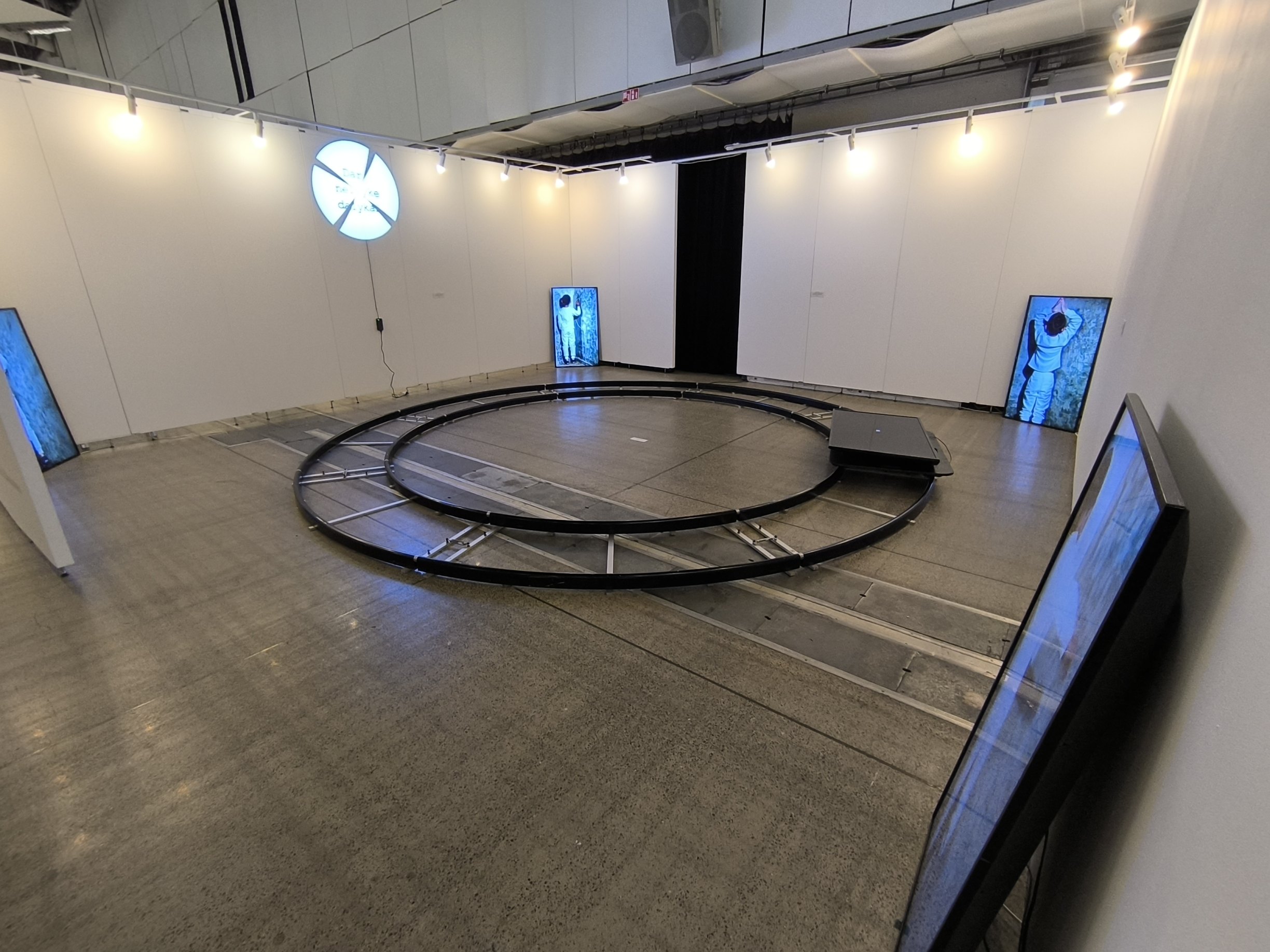
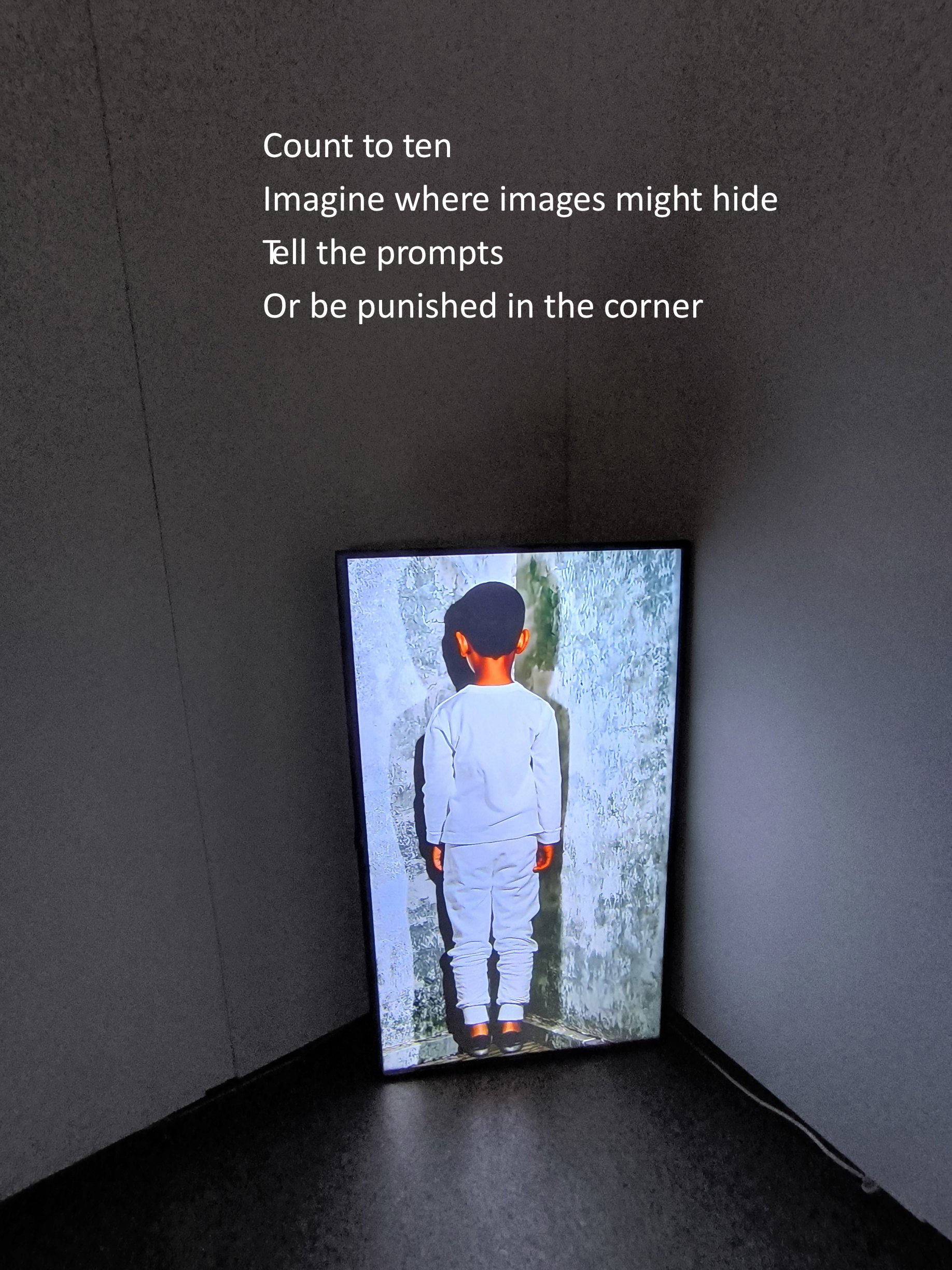
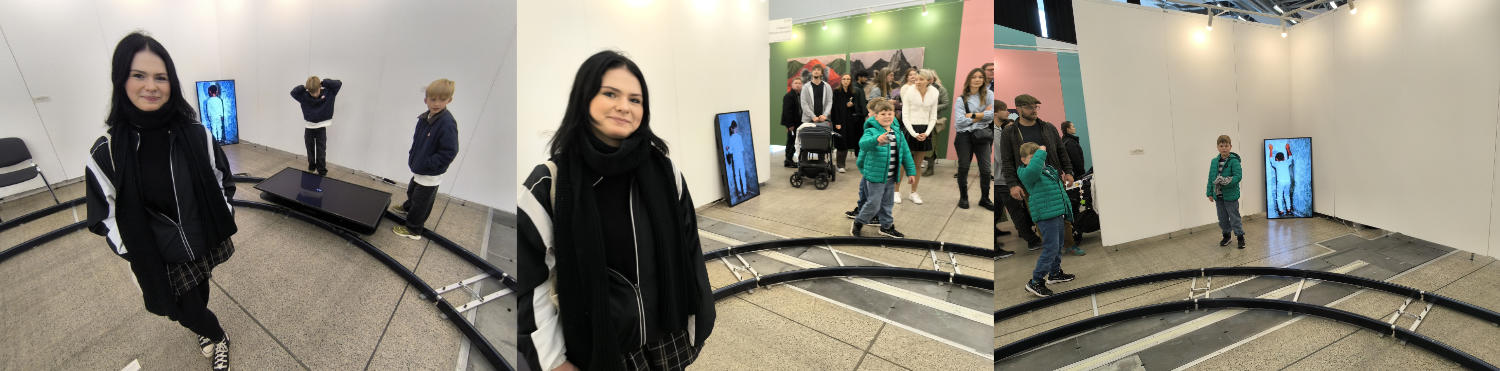
Art is outside in the art fair. In this space, works with images that have not yet occurred are gathered. It has not happened here—yet. This is an inverse place: reversed murmurs, replies, eavesdroppings, shouts. Prompts and curses for images.
Being behind others—unable to fully see what is happening—forces one to crane forward, to be ironic, or simply to try to understand how the space allotted to you is perceived.
Things that have not yet happened are real. Being beyond the marked boundaries of events is the secret joy of all that has been avoided.
Sound: Gleb Divov
#   __    __            __        __                  __        __        __                                                __
#  |  \  |  \          |  \      |  \                |  \      |  \      |  \                                              |  \
#  | $$  | $$ _______  | $$____   \$$ _______    ____| $$      | $$____   \$$ ______ ____          ______   _______    ____| $$
#  | $$  | $$|       \ | $$    \ |  \|       \  /      $$      | $$    \ |  \|      \    \        |      \ |       \  /      $$
#  | $$  | $$| $$$$$$$\| $$$$$$$\| $$| $$$$$$$\|  $$$$$$$      | $$$$$$$\| $$| $$$$$$\$$$$\        \$$$$$$\| $$$$$$$\|  $$$$$$$
#  | $$  | $$| $$  | $$| $$  | $$| $$| $$  | $$| $$  | $$      | $$  | $$| $$| $$ | $$ | $$       /      $$| $$  | $$| $$  | $$
#  | $$__/ $$| $$  | $$| $$__/ $$| $$| $$  | $$| $$__| $$      | $$  | $$| $$| $$ | $$ | $$      |  $$$$$$$| $$  | $$| $$__| $$
#   \$$    $$| $$  | $$| $$    $$| $$| $$  | $$ \$$    $$      | $$  | $$| $$| $$ | $$ | $$       \$$    $$| $$  | $$ \$$    $$
#   _\$$$$$$  \$$ __\$$ \$$$$$$$__\$$ \$$ __\$$  \$$$$$$$       \$$   \$$ \$$ \$$  \$$  \$$        \$$$$$$$ \$$   \$$  \$$$$$$$
#  |  \          |  \          |  \      |  \
#  | $$  ______ _| $$_         | $$____   \$$ ______ ____          ______    ______
#  | $$ /      \   $$ \        | $$    \ |  \|      \    \        /      \  /      \
#  | $$|  $$$$$$\$$$$$$        | $$$$$$$\| $$| $$$$$$\$$$$\      |  $$$$$$\|  $$$$$$\
#  | $$| $$    $$| $$ __       | $$  | $$| $$| $$ | $$ | $$      | $$  | $$| $$  | $$
#  | $$| $$$$$$$$| $$|  \      | $$  | $$| $$| $$ | $$ | $$      | $$__| $$| $$__/ $$
#  | $$ \$$     \ \$$  $$      | $$  | $$| $$| $$ | $$ | $$       \$$    $$ \$$    $$
#   \$$  \$$$$$$$  \$$$$        \$$   \$$ \$$ \$$  \$$  \$$       _\$$$$$$$  \$$$$$$
#                                                                |  \__| $$
#                                                                 \$$    $$
#                                                                  \$$$$$$
"Unbind him and let him go"
February 15–March 9, 2024
TITANIKAS Gallery
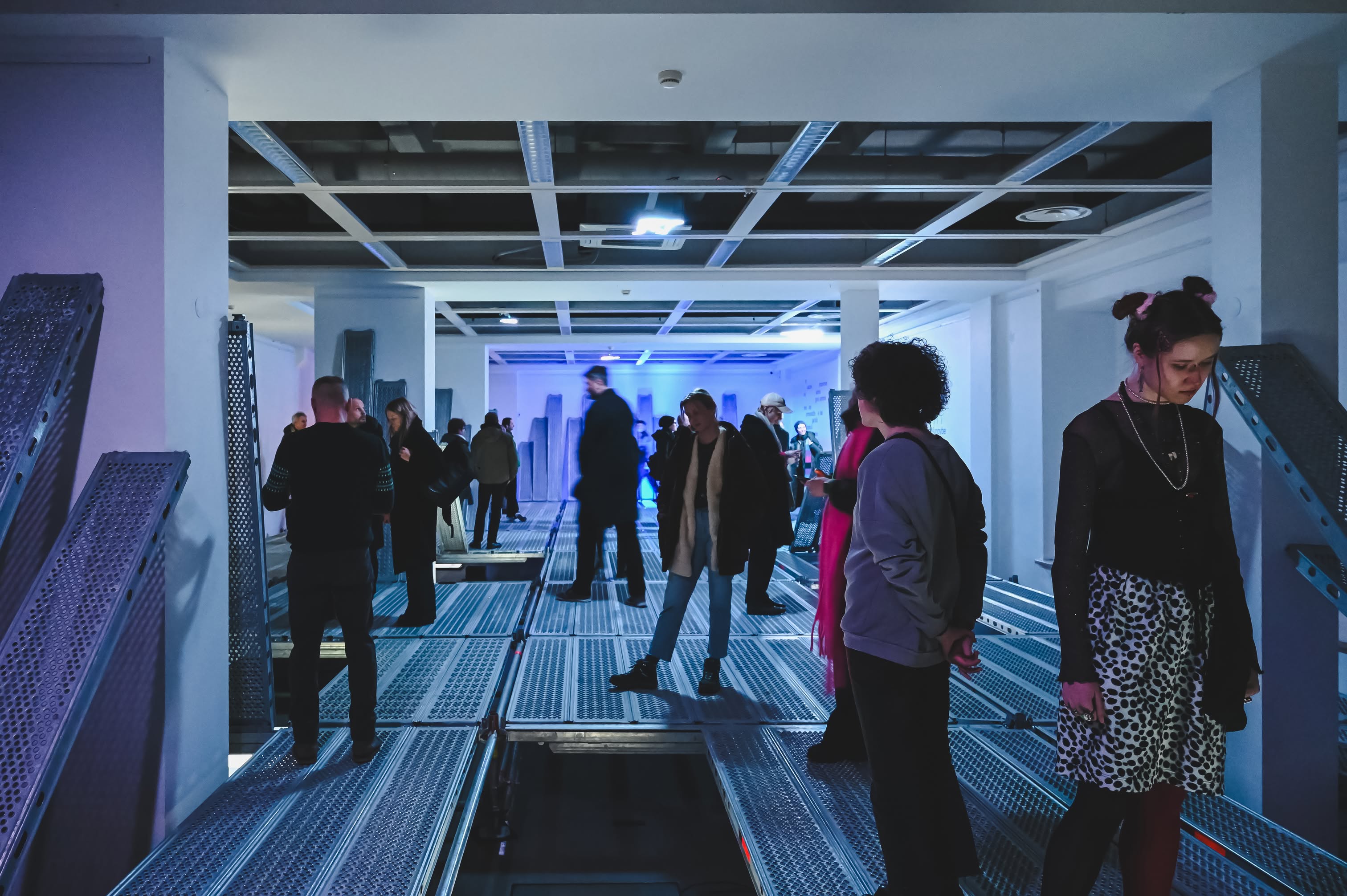
Photo by Rusnė Šimulynaitė
Photo documentation
Imagine that an as yet unknown technology enables us to resurrect anything: any being, any age, any state of the world. Knowledge of the fundamental physical and metaphysical laws as well as comprehensive data on the evolution of the universe until this point should allow a precise reconstruction of any process of emergence or disappearance that constituted it. Animating unlived time and decomposed space, at least as a projection or simulation, has become a shared fantasy, a readily recognisable register of moving and still images. The ultimate expression of our representational curiosity; what beguiles us most is not what mechanical image recording devices can or could capture, but what took place before their invention (in other words, not in our habitual reality). Bringing that back to life requires an algorithm – a text in the broadest sense, a prompt describing what we desire to see. Hence, image becomes arbitrary and abstract, no matter what its particular content is. The essential thing is that such an image is possible in principle, even if no consciousness presently alive has ever seen it with its own eyes, and its source or prototype is unidentifiable. Just like sound, image can be acousmatic, emanating from an invisible source – from a sinkhole, a cavity, from beneath the surface, among the debris of what once was. What we see and hear is inevitably ghostlike. The image is finally unbound, unwrapped from the shroud of spacetime, empowered to rise from the catacomb and go in any direction. It has ceased to refer to anything conventionally perceived as real, but it is alive in an as yet unfamiliar sense, because someone recognised it as such. Yet no resurrection happens without entropy and danger to its witness. What comes back is not exactly the same as what was intended to be reanimated, if not its absolute opposite – an otherworldly entity that refuses to return to the ground and threatens the integrity of the viewer’s self-consciousness. Even with this risk in mind, though, the power to unbind (image, sound, gaze, time) and let go is too tempting. That is when they come to life and begin to rush to the surface – or inside. The viewer can only let themselves be devoured and see where it leads.
Text: Jurij Dobriakov
Architecture: Mindaugas Reklaitis
Sound: Benas Buivydas
  ____  ____   _    ____  _____   ____   _    ____ _____ ____    _____ ___  ____
 / ___||  _ \ / \  |  _ \| ____| |  _ \ / \  |  _ \_   _/ ___|  |  ___/ _ \|  _ \
 \___ \| |_) / _ \ | |_) |  _|   | |_) / _ \ | |_) || | \___ \  | |_ | | | | |_) |
  ___) |  __/ ___ \|  _ <| |___  |  __/ ___ \|  _ < | |  ___) | |  _|| |_| |  _ <
 |____/|_| /_/   \_\_| \_\_____| |_| /_/   \_\_| \_\|_| |____/  |_|   \___/|_| \_\
  _____ _   _ _____ ____  _____ _   _ ____    ____  _        _    _   _ _____
 |_   _| | | | ____/ ___|| ____| | | / ___|  |  _ \| |      / \  | \ | | ____|
   | | | |_| |  _| \___ \|  _| | | | \___ \  | |_) | |     / _ \ |  \| |  _|
   | | |  _  | |___ ___) | |___| |_| |___) | |  __/| |___ / ___ \| |\  | |___
   |_| |_| |_|_____|____/|_____|\___/|____/  |_|   |_____/_/   \_\_| \_|_____|
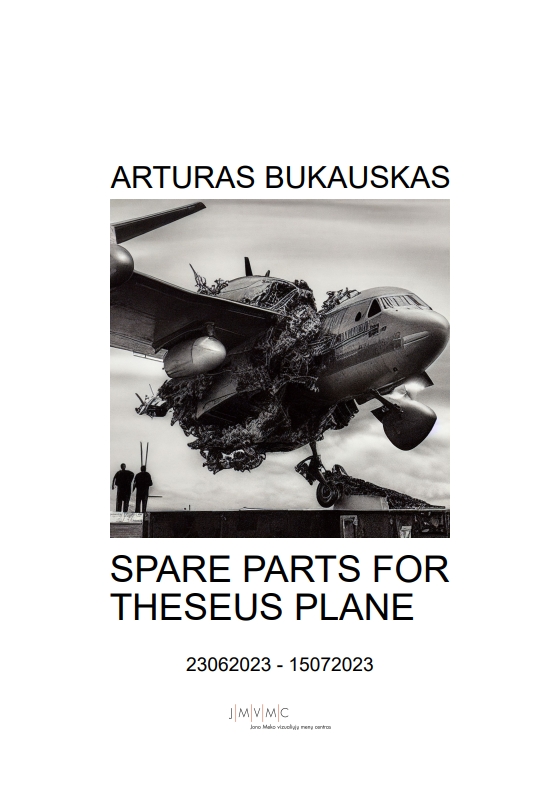
"SPARE PARTS FOR THESEUS PLANE"
January 23 - July 15, 2023
Jonas Mekas Visual Arts Center
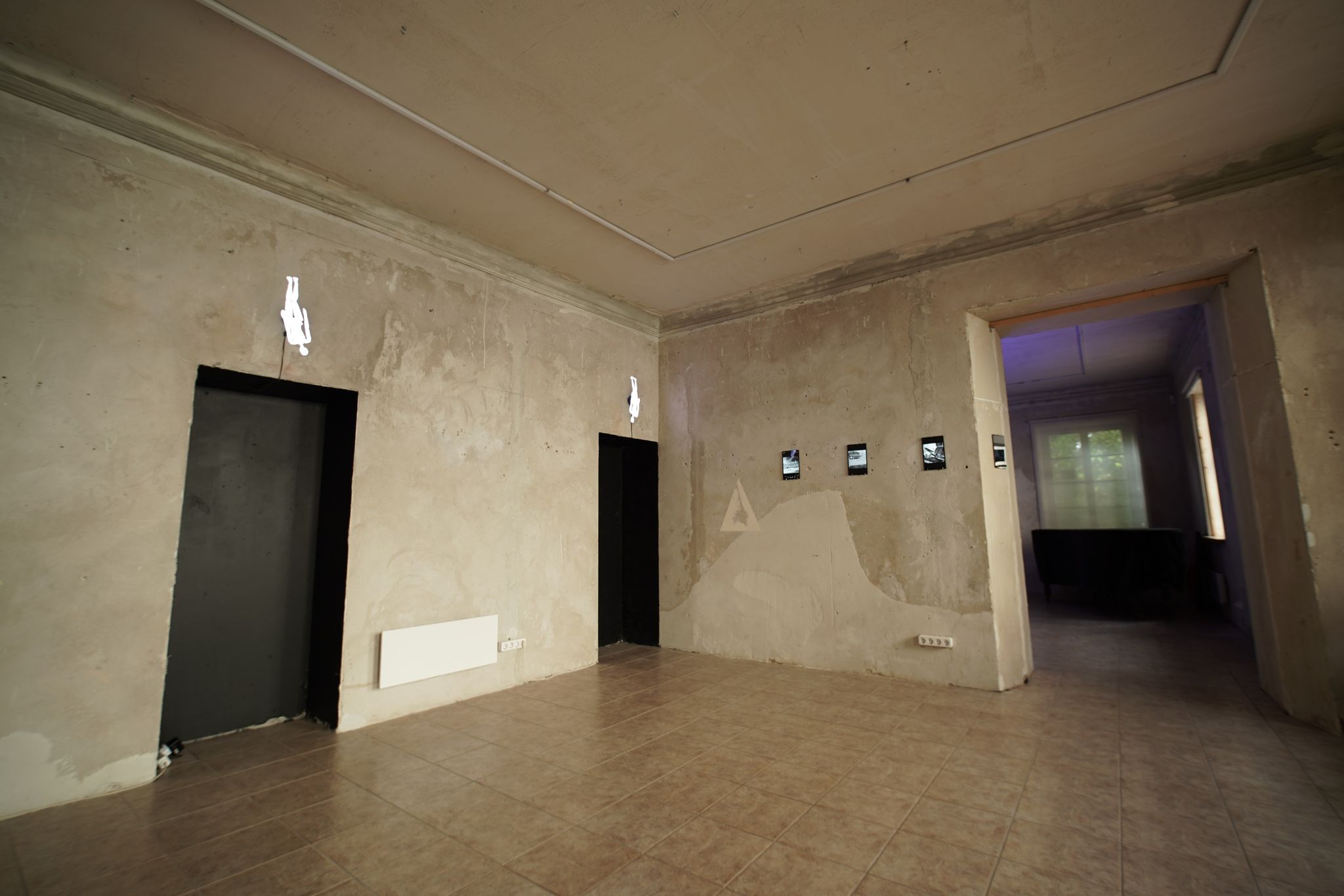
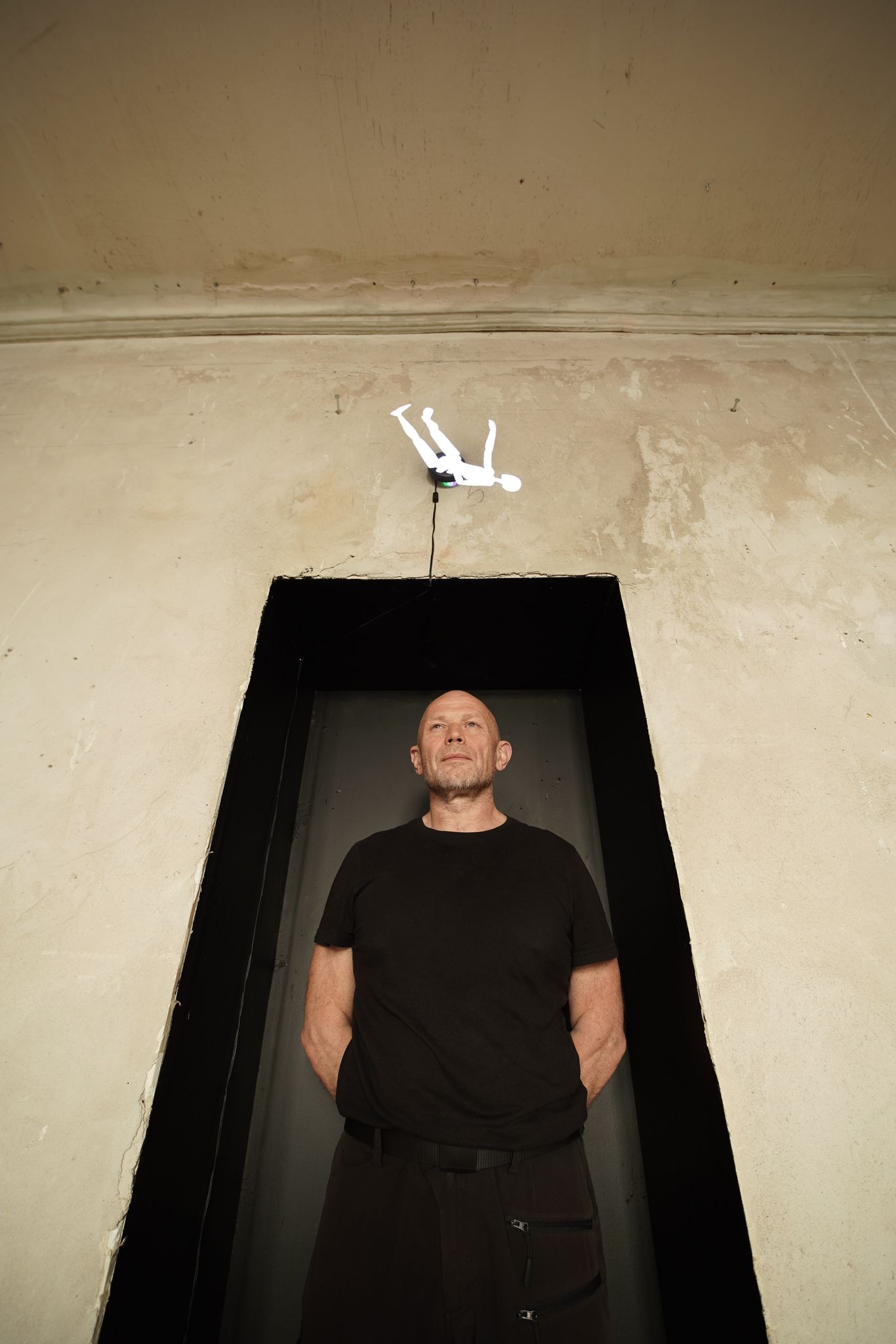
In 1933, aviators Darius and Girėnas flew from New York to Kaunas. They flew a modified experimental aircraft named Lituanica. They wanted to make Lithuania famous with this flight. The plane crashed in Germany, just a short distance from its destination. The bodies of the aviators were embalmed and kept in a mausoleum. When the war started, they were hidden in the wall of the Kaunas Medical Institute. After the war, nothing was known about their hiding place. Thirty years after the air crash, the grown-up daughter of one of the aviators, now a doctor, used her percussion method to search for cavities in the walls. That's how she found her father.
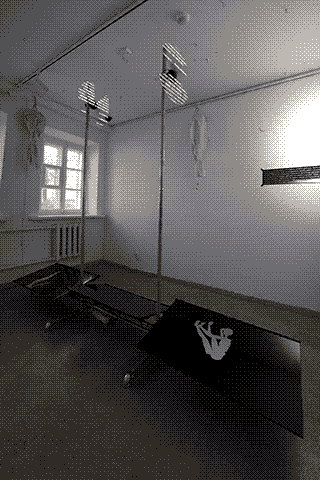
This exhibition is the third and final of a composition of three exhibitions. The series of exhibitions based on the principle of Theseus's ship (plane) deals with the question of the continuity of the body and memory.
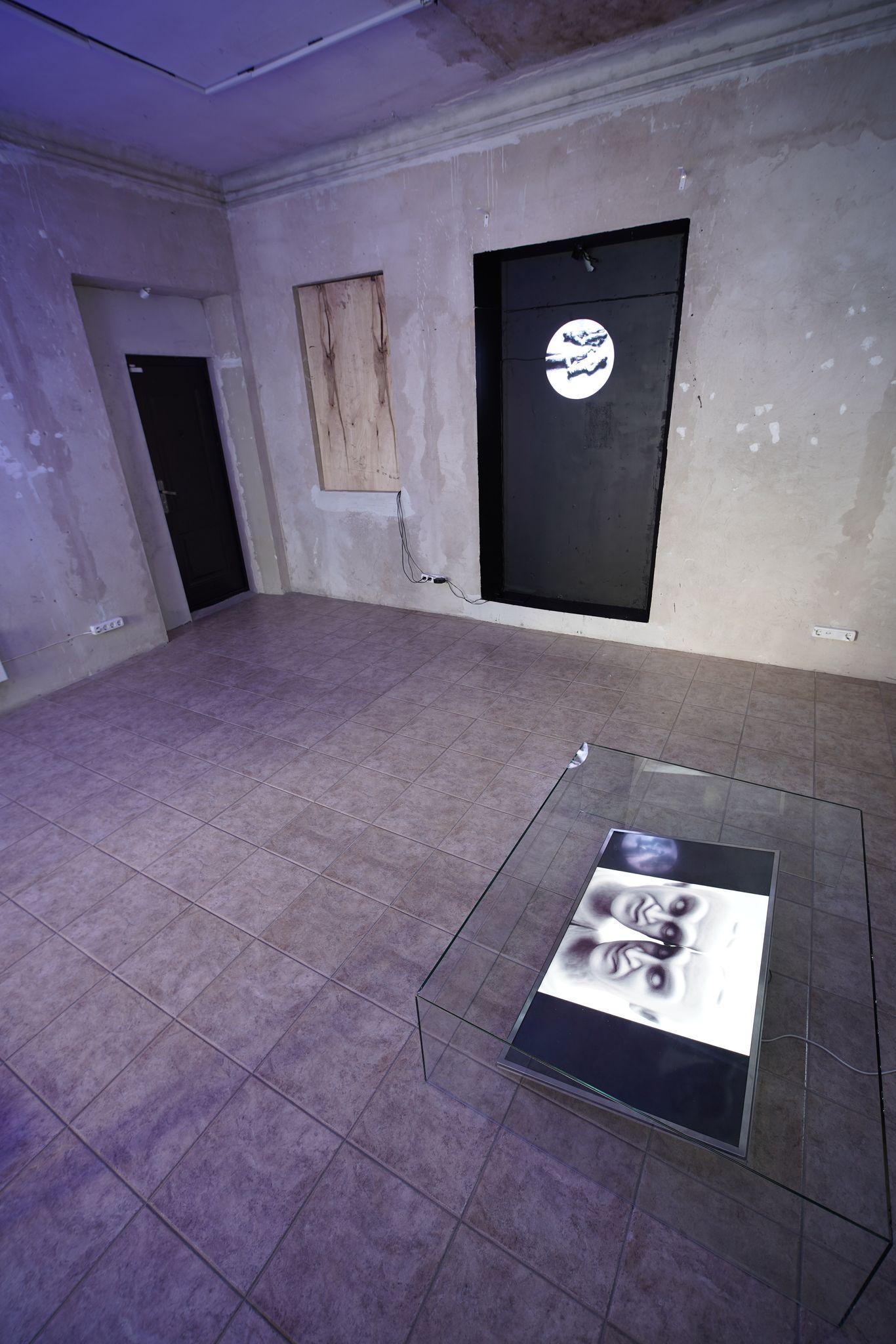
In the third exhibition, the same parts, understood both as spare parts and as wrecks, are described and multiplied by means of prompt engineering (human language for machines). One could say that the works remain "behind and after" all three exhibitions because, according to Theseus' paradox, they find and pass into each other, animate, and become unnameable as they come to life. They are neither the fragments of a plane, nor the parts, nor the bodies of pilots. The catastrophe has not happened, it has only been approached, only the rough connections between the still falling parts and the human body that has reached the limit of time are observed.
                       _|        _|
 _|_|_|    _|_|_|    _|    _|_|    _|                                      _|_|_|  _|_|_|    _|_|_|_|    _|_|_|    _|_|_|
 _|    _|  _|    _|  _|  _|    _|  _|                _|  _|_|    _|_|    _|        _|    _|  _|        _|        _|
 _|_|_|    _|_|_|    _|  _|    _|  _|                _|_|      _|_|_|_|  _|  _|_|  _|_|_|    _|_|_|      _|_|      _|_|
 _|        _|    _|  _|  _|    _|  _|                _|        _|        _|    _|  _|    _|  _|              _|        _|
 _|        _|    _|  _|    _|_|    _|                _|          _|_|_|    _|_|_|  _|    _|  _|_|_|_|  _|_|_|    _|_|_|
                       _|        _|
                                           _|_|_|_|_|
"Ersatzteile für das Schiff des Theseus?""
March 26 - April 2, 2022
OSTARA gallery. Henrichenburg
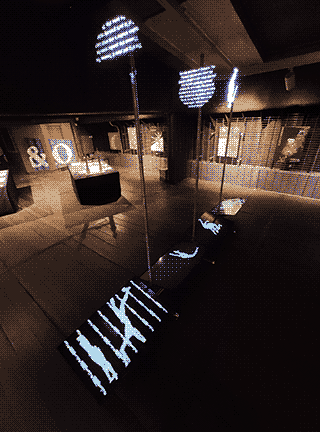
Zu sehen ist außerdem die Arbeit Ersatzteile für das Schiff von Theseus (2022) von Arturas Bukauskas. In seiner 3D-Hologramm- und Videoinstallation denkt der Künstler darüber nach, wie Körperbewegungen und Handlungen durch neue Technologien beeinflusst werden.
Auf mehreren Monitoren sind abstrakte Oberflächen in Bewegung zu sehen, die sich scheinbar im Widerstreit befinden. Dazu zeigen drei 3D-Hologramme Worte, die von einer künstlichen Intelligenz generiert wurden. Es handelt sich um Wortneuschöpfungen für menschliche Tätigkeiten, die es noch nicht gibt und die vielleicht erst in Zukunft durch neue Erfindungen möglich sein werden.
Die Installation fragt, ob wir durch zukünftige Werkzeuge bald Tätigkeiten verrichten können, die uns heute noch unmöglich, gar paradox erscheinen.
   ___  __ __  _ __ _____ ___   ___   ___  __    _   _  __ _____ __
  / _/ / // / /// //_  _// _/  / o.) / _/,'_/  .' \ / |/ //_  _// /
 / _/ / // /_/ U /  / / / _/  / o \ / _// /_n / o // || /  / / / /
/___//_//___/\_,'  /_/ /___/ /___,'/___/|__,'/_n_//_/|_/  /_/ /_/  /_/|_//_/|_/
“a line running on both sides of sea level"
February 23 - March 10, 2022
ARTIFEX gallery
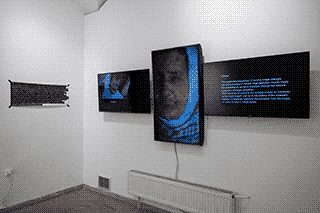
Bukauskas:
The ship and plane of Theseus. The Theseus ship paradox raises the question whether a ship which has had all of its parts gradually replaced remains the same ship. The plane of Theseus is an object whose parts have been replaced on the ground, then in the air, during the fall, then on the ground again, with numerous rearrangements of the crash site and stuffed dummies of the pilots. The question is whether we are a part of this plane, and perhaps an already replaced one. How are the functions of memory redistributed in a body that expires? How does memory reorganise those functions in movements? Can a shared reminiscence be triggered by an external action? An accident is constantly materialised by motion, while every moved object is a projection of an accident. The exhibition features bodies (like computer storage media undergoing defragmentation) that have ceased resisting both the external gaze and the attempts to provide care to them. Bodies as the totality of replaceable parts. Bodies which, when moved, remind us of the possibility of unfinished actions. The question of truth is irrelevant, because the real is no longer confined to the bodily senses. The position of a contemporary artist that is reconsidered in the exhibition is also no longer any bodily position – the artist has come to the store and forgotten the shopping list. The intention was to copy the actions of buying, to pretend to act against them, in a politically and socially active way – and instead the artist froze. The viewer is invited to be a witness to that and to date (as in dating, i.e., making obsolete over time) together. A few actions remain relevant.‘Can you really use a spoon though?’
Šarapovas:
Every sound is a small earthquake. Or not so small. The aural environment – the vehicle of tactile memory – is experienced as a very real and tangible yet also somewhat spectral manifestation of the past reality. The listener perceives sound as their present; sound testifies: these are incidents of temporal reality, I reproduce them in your surfaces. The world also experiences your presence in the sea of air as sound. It says: I am Sisyphus, a swarm of small Sisyphi; and immediately pretends to be null, an invariable repetition, a loop. Helmholtz takes a knife and divides a circle into two equal parts. That is how the sine wave, the mother of all sounds, is born. Mare Memoria, the sea of memory, is the movement of molecules in liquids, gases and solid bodies, waves constantly rolling on the shore of the listener’s ear, rubbing stories of ever new catastrophes into their cochlea.
A second-long sound cycle – one ascent and one descent of the sine wave – travels 343 metres in air at 20°C and moderate humidity at sea level.
pp pp     eee  rr rr   sss   oooo  nn nnn    aa aa   eee
ppp  pp ee   e rrr  r s     oo  oo nnn  nn  aa aaa ee   e
pppppp  eeeee  rr      sss  oo  oo nn   nn aa  aaa eeeee
pp       eeeee rr         s  oooo  nn   nn  aaa aa  eeeee
pp                     sss
“PERSONAE”
April 9, 2026
Organum, Vilnius
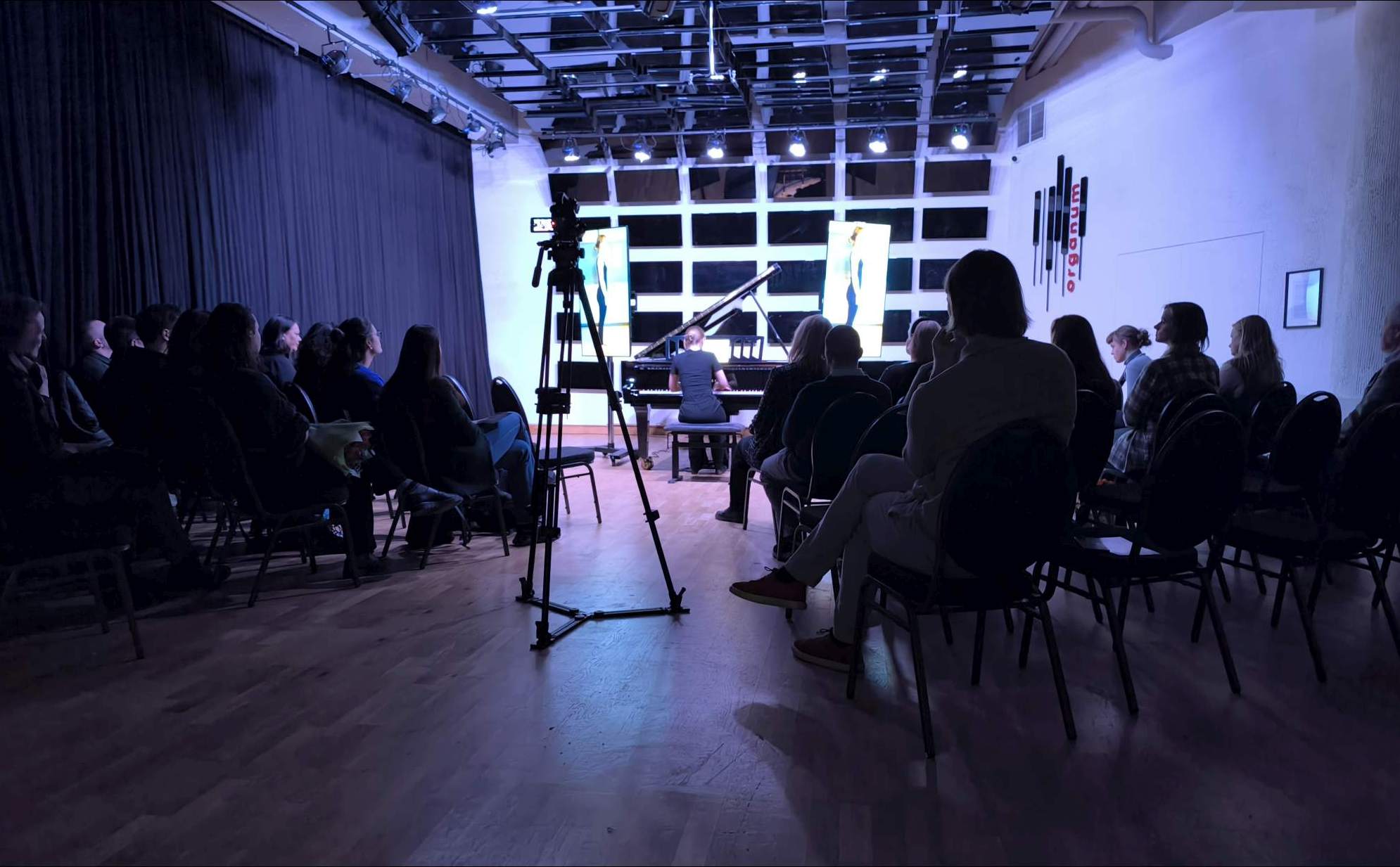
Video content shows a strange, clumsy, awkward “bad actor” movement. It is as if, in the state of persona, every movement inevitably already represents something and is trapped in its own visibility. From the perspective of musical performance, persona is determined by the work’s performance tradition, the audience’s conventions of listening, the physicality of the performer’s body, and the present moment. The nature of the generated image is similar: it does not signify anything specific in advance, but is determined by verbal prompts, images of reality, and our ways and habits of seeing, and thus “performs the unperformable.”
“Women's portraits”
Audiovisual project
J. Gedmintaitė (soprano), E. Kasteckaitė (piano), N. Savičenko (reciter), Vilnius Choral Singing School choir “Liepaitės”.
Video projections. Vilnius, April 29, 2014. Klaipėda, May 21, 2014.
“Gardens of Sorrow”
L. Narvilaitė “Gardens of Sorrow” – ensemble “Giunter Percussion.” Video projection. “Young Music” festival, Klaipėda, May 7, 2010.
“Night music”
Duo Strimaitis music and video performance “Night music”. Video installations. Festival “Music of Change”. Klaipeda. November 10. Vilnius, April 11, 2009.
[menu]
menuitem=CD, Start computer with CD-ROM support.
menuitem=NOCD, Start computer without CD-ROM support.
menuitem=HELP, View the Help file.
menudefault=CD,30
menucolor=7,0
[CD]
device=himem.sys /testmem:off
device=oakcdrom.sys /D:mscd001
device=btdosm.sys
device=flashpt.sys
device=btcdrom.sys /D:mscd001
device=aspi2dos.sys
device=aspi8dos.sys
device=aspi4dos.sys
device=aspi8u2.sys
device=aspicd.sys /D:mscd001
[NOCD]
device=himem.sys /testmem:off
[HELP]
device=himem.sys /testmem:off
[COMMON]
files=10
buffers=10
dos=high,umb
stacks=9,256
devicehigh=ramdrive.sys /E 2048
lastdrive=z
device=display.sys con=(ega,,1)
country=370,775,country.sys
install=mode con cp prepare=((775) ega3.cpi)
install=mode con cp select=775
menuitem=CD, Start computer with CD-ROM support.
menuitem=NOCD, Start computer without CD-ROM support.
menuitem=HELP, View the Help file.
menudefault=CD,30
menucolor=7,0
[CD]
device=himem.sys /testmem:off
device=oakcdrom.sys /D:mscd001
device=btdosm.sys
device=flashpt.sys
device=btcdrom.sys /D:mscd001
device=aspi2dos.sys
device=aspi8dos.sys
device=aspi4dos.sys
device=aspi8u2.sys
device=aspicd.sys /D:mscd001
[NOCD]
device=himem.sys /testmem:off
[HELP]
device=himem.sys /testmem:off
[COMMON]
files=10
buffers=10
dos=high,umb
stacks=9,256
devicehigh=ramdrive.sys /E 2048
lastdrive=z
device=display.sys con=(ega,,1)
country=370,775,country.sys
install=mode con cp prepare=((775) ega3.cpi)
install=mode con cp select=775
[→] Artistic research presentation for the 5th International Conference on Time Perspectives (2021). This is both a research presentation and a form of research in itself. It is animable and animated at the same time. This is a 360-degree video. You can interact with it, your gaze is free. You also have the right to absolutely not experience the video. As image navigation mechanisms, I propose four individual components – individual perception of time, memory, intuition, and imagination.
“Myth no. 688E”
2 audiovisual texts for G. Sviderskytė's research “Lituanica documentica”.
Vilnius, January 2013